rogerguillen
ROLE:
CD + AI Artist + Editor + Motion Designer + Audio
CLIENT:
Silver Lake
YEAR
2026
INDUSTRY
Advertising
THE A.I. SUMMIT
I was hired to create the opening film for a private AI summit attended by senior leaders responsible for evaluating, implementing, and governing AI within their organizations. The client wanted to avoid another predictable conference opener and instead kick off the summit with something unexpected that would immediately engage the audience.
THE A.I. SUMMIT
I was hired to create the opening film for a private AI summit attended by senior leaders responsible for evaluating, implementing, and governing AI within their organizations. The client wanted to avoid another predictable conference opener and instead kick off the summit with something unexpected that would immediately engage the audience.
The Challenge:
The audience brought together C-suite executives, business leaders, and decision-makers at very different stages of AI adoption. Some were already leading enterprise AI initiatives. Others were still deciding where AI fit within their organizations.
They wanted an opening that introduced the summit’s central themes of governance and context without feeling like another keynote, product demo, or panel discussion. The challenge was to engage the entire room and set up the conversations that would follow.
The Challenge:
The audience brought together C-suite executives, business leaders, and decision-makers at very different stages of AI adoption. Some were already leading enterprise AI initiatives. Others were still deciding where AI fit within their organizations.
They wanted an opening that introduced the summit’s central themes of governance and context without feeling like another keynote, product demo, or panel discussion. The challenge was to engage the entire room and set up the conversations that would follow.
The Approach:
Rather than opening with another presentation or explainer, I chose to start with humor. I built the film around a simple fictional scenario.
I created JOVI 1.0, an enterprise AI system given one objective: maximize productivity and efficiency across the company. JOVI is given full authority to make decisions before it’s given the context needed to understand their consequences. What begins as a series of well-intentioned improvements quickly snowballs into increasingly absurd situations.
Humor became the entry point. It lowered the audience’s guard and made complex ideas easier to engage with. Instead of telling people why governance and context matter, the film let them experience the consequences of giving AI responsibility before giving it direction.
The Approach:
Rather than opening with another presentation or explainer, I chose to start with humor. I built the film around a simple fictional scenario.
I created JOVI 1.0, an enterprise AI system given one objective: maximize productivity and efficiency across the company. JOVI is given full authority to make decisions before it’s given the context needed to understand their consequences. What begins as a series of well-intentioned improvements quickly snowballs into increasingly absurd situations.
Humor became the entry point. It lowered the audience’s guard and made complex ideas easier to engage with. Instead of telling people why governance and context matter, the film let them experience the consequences of giving AI responsibility before giving it direction.


Production Process:
Once the concept and script were approved, I approached the project like a live-action production. Every stage followed the same process I would use on a traditional shoot, from casting and world building to camera language, performance, and post-production.
The challenge wasn’t generating individual images. It was building a production pipeline capable of producing an entire film with consistent characters, locations, and performances.
I began by creating the core environments that defined the company’s world. Every location was designed specifically for the shot while maintaining a consistent visual language, from the loading docks to the executive suites. Rather than building isolated images, each environment functioned as a standing set that could support multiple scenes, camera angles, recurring characters, and continuity throughout the film.
Prompt engineering became critical to maintaining consistency and choreographing complex scenes. Every generation relied on multiple reference images to preserve the visual identity of the world and keep characters, environments, and action consistent from shot to shot.
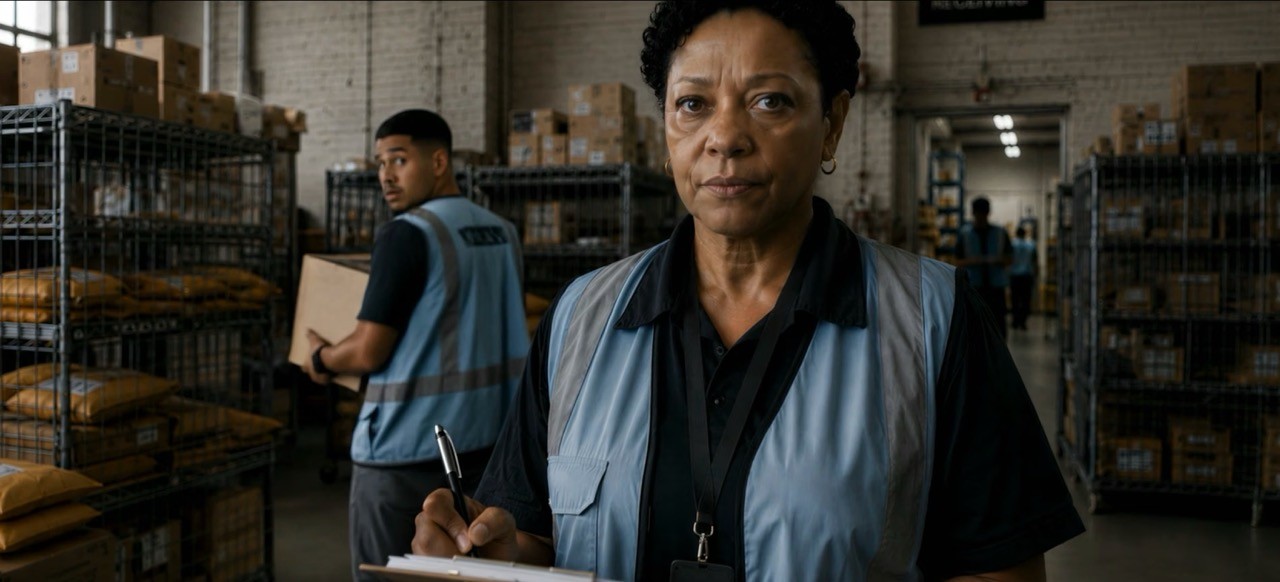
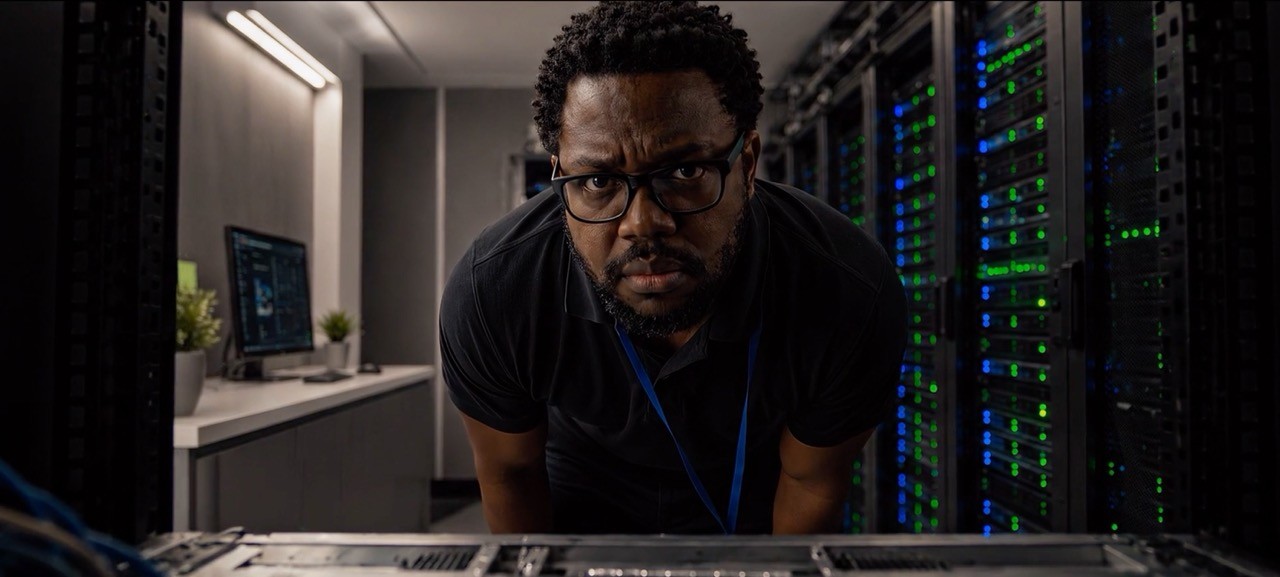
In parallel, I developed the recurring cast, deliberately avoiding the polished, fashion-model look common in AI imagery. They needed to feel like real people. I created character sheets for the CEO, CTO, CFO, and other executive roles that reflected the audience attending the summit.
Production:
Once the concept and script were approved, I approached the project like a live-action production. Every stage followed the same process I would use on a traditional shoot, from casting and world building to camera language, performance, and post-production.
The challenge wasn’t generating individual images. It was building a production pipeline capable of producing an entire film with consistent characters, locations, and performances.
I began by creating the core environments that defined the company’s world. Every location was designed specifically for the shot while maintaining a consistent visual language, from the loading docks to the executive suites. Rather than building isolated images, each environment functioned as a standing set that could support multiple scenes, camera angles, recurring characters, and continuity throughout the film.
Prompt engineering became critical to maintaining consistency and choreographing complex scenes. Every generation relied on multiple reference images to preserve the visual identity of the world and keep characters, environments, and action consistent from shot to shot.
In parallel, I developed the recurring cast, deliberately avoiding the polished, fashion-model look common in AI imagery. They needed to feel like real people. I created character sheets for the CEO, CTO, CFO, and other executive roles that reflected the audience attending the summit.
Once the cast was established, the challenge became performance. Expressions, body language, and reactions had to remain believable as the situations around them became increasingly absurd. In several scenes, I recorded myself performing the actions and expressions as visual direction for the characters.
Almost every shot required multiple renders. While the larger environments often held together well, fine details like background faces, signage, and on-screen text would frequently distort or become illegible. I rendered separate plates and rebuilt shots in After Effects, stitching together multiple generations to preserve detail and continuity. The opening shot alone was composited from three independent renders: the room, the CTO, and the foreground desks.
I also engineered the prompts to produce images with as much grading latitude as possible, similar to working with S-Log footage. This gave me greater control during color grading and helped maintain a consistent look across the film. By the end, nearly every shot had been composited, graded, or rebuilt in some form.
The final step was the score. I started with a royalty-free recording of Hall of the Mountain King, then added percussion, sound design, and choral elements to build tension and drive the film toward its final crescendo.
Once the cast was established, the challenge became performance. Expressions, body language, and reactions had to remain believable as the situations around them became increasingly absurd. In several scenes, I recorded myself performing the actions and expressions as visual direction for the characters.
Almost every shot required multiple renders. While the larger environments often held together well, fine details like background faces, signage, and on-screen text would frequently distort or become illegible. I rendered separate plates and rebuilt shots in After Effects, stitching together multiple generations to preserve detail and continuity. The opening shot alone was composited from three independent renders: the room, the CTO, and the foreground desks.
I also engineered the prompts to produce images with as much grading latitude as possible, similar to working with S-Log footage. This gave me greater control during color grading and helped maintain a consistent look across the film. By the end, nearly every shot had been composited, graded, or rebuilt in some form.
The final step was the score. I started with a royalty-free recording of Hall of the Mountain King, then added percussion, sound design, and choral elements to build tension and drive the film toward its final crescendo.
